Your menstrual cycle is one of the most important vital signs your body produces. It's not just about your period — it's a monthly report card on your reproductive, hormonal, metabolic, and even cardiovascular health. Yet most people receive shockingly little education about how their cycle actually works.
This guide explains the complete menstrual cycle: all four phases, the hormones that drive them, what's considered normal, warning signs to watch for, and how tracking can give you meaningful health insights.
The Basics: What Is the Menstrual Cycle?
The menstrual cycle is the recurring process by which the body prepares for potential pregnancy. It involves a complex interplay between the brain (hypothalamus and pituitary gland), the ovaries, and the uterus.
The cycle begins on the first day of menstrual bleeding (Day 1) and ends the day before the next period starts. While 28 days is often cited as "the" cycle length, research shows significant variation:
- Average cycle length: 29.3 days (not 28)
- Normal range: 21–35 days
- Cycle variation within an individual: Up to 7–9 days between cycles is normal
- Only 13% of women have cycles that consistently land on 28 days
Source: npj Digital Medicine, 2019 (analysis of 612,613 cycles)
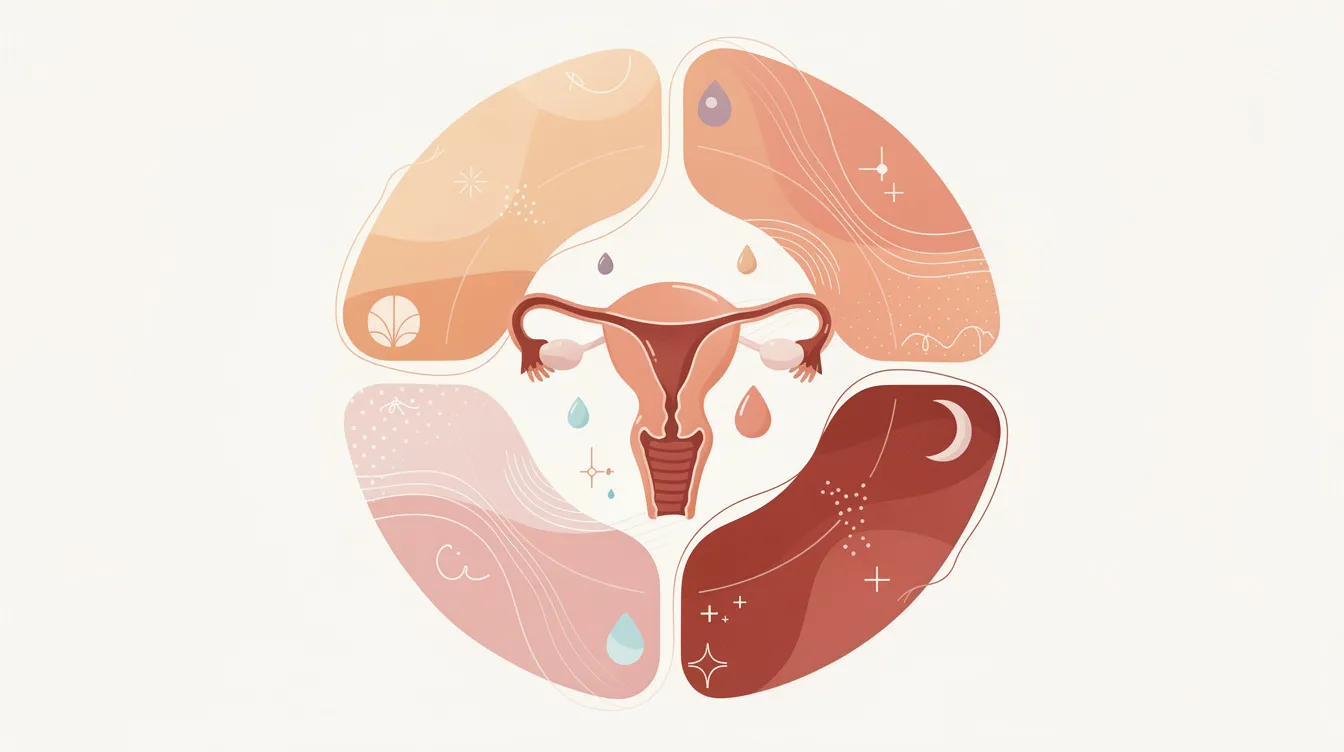
The Four Phases of the Menstrual Cycle
Phase 1: Menstruation (Days 1–5, approximately)
What happens: The uterine lining (endometrium) sheds, resulting in menstrual bleeding. This occurs because progesterone and estrogen levels drop sharply at the end of the previous cycle, signaling the uterus that pregnancy did not occur.
Duration: Typically 3–7 days. The average is 5 days.
Blood loss: Normal menstrual blood loss is 30–80 ml per cycle. That's roughly 2–5 tablespoons. More than 80 ml is considered heavy menstrual bleeding (menorrhagia).
Hormones: Both estrogen and progesterone are at their lowest levels during early menstruation. Follicle-stimulating hormone (FSH) begins to rise, signaling the ovaries to start preparing eggs for the next ovulation.
How you might feel:
- Cramping (caused by prostaglandins triggering uterine contractions)
- Fatigue and lower energy
- Headaches (related to estrogen withdrawal)
- Mood changes (lower serotonin levels)
- Bloating (fluid retention from hormonal shifts)
What's normal vs. what's not:
- Normal: Mild to moderate cramps relieved by over-the-counter pain relief
- Concern: Pain so severe it interferes with daily activities (possible endometriosis indicator)
- Normal: Clots smaller than a quarter (2.5 cm)
- Concern: Frequently passing large clots (possible fibroids or bleeding disorder)
- Normal: Period lasting 3–7 days
- Concern: Periods lasting more than 8 days or bleeding between periods
Phase 2: Follicular Phase (Days 1–13, approximately)
What happens: This phase overlaps with menstruation and continues until ovulation. The pituitary gland releases FSH, stimulating several follicles in the ovaries to grow. Each follicle contains an immature egg (oocyte). Typically, one follicle becomes dominant — growing faster than the others — and will eventually release its egg at ovulation.
As the dominant follicle grows, it produces increasing amounts of estrogen. This estrogen has several effects:
- Stimulates the uterine lining to thicken and develop a blood-rich environment
- Eventually triggers a surge in luteinizing hormone (LH), which causes ovulation
- Influences mood, energy, and cognitive function
Duration: Variable — this is the phase that causes most cycle length variation. It can be as short as 7 days or as long as 21 days.
Hormones:
- FSH rises to stimulate follicle growth
- Estrogen climbs steadily as the dominant follicle grows
- LH remains low until the pre-ovulatory surge
- Progesterone remains low
How you might feel:
- Increasing energy and motivation
- Better mood and social confidence
- Improved verbal fluency and cognitive performance
- Higher pain tolerance
- Increased libido (rising estrogen effect)
Phase 3: Ovulation (Day 14, approximately — but highly variable)
What happens: Ovulation is the main event of the menstrual cycle. The surge in LH (triggered by peak estrogen levels) causes the dominant follicle to rupture and release a mature egg into the fallopian tube.
The egg is viable for 12–24 hours after release. Sperm can survive in the reproductive tract for up to 5 days. This creates a "fertile window" of approximately 6 days — the 5 days before ovulation and the day of ovulation itself.
Key facts about ovulation:
- It does NOT always happen on Day 14 — this varies widely based on follicular phase length
- Some people feel ovulation as a sharp, brief pain on one side (mittelschmerz)
- Cervical mucus becomes clear, stretchy, and slippery (similar to raw egg whites) — this is the body's way of facilitating sperm transport
- Basal body temperature (BBT) typically rises 0.2–0.5°C after ovulation (due to progesterone)
Hormones:
- LH surges dramatically (this is what ovulation predictor kits detect)
- FSH also rises briefly
- Estrogen peaks just before ovulation, then dips
- Progesterone begins to rise after egg release
How you might feel:
- Peak energy and confidence
- Highest libido of the cycle
- Possible mild pelvic pain (mittelschmerz)
- Changes in cervical mucus
- Slight rise in basal body temperature (detectable with a BBT thermometer)
Phase 4: Luteal Phase (Days 15–28, approximately)
What happens: After ovulation, the ruptured follicle transforms into the corpus luteum — a temporary endocrine structure that produces progesterone. Progesterone is the dominant hormone of this phase, and its job is to maintain the uterine lining in case a fertilized egg implants.
If pregnancy does not occur, the corpus luteum degrades after about 10–14 days. Progesterone and estrogen levels fall sharply, and this hormonal drop triggers the shedding of the uterine lining — beginning a new cycle.
If pregnancy occurs, the embryo produces hCG (human chorionic gonadotropin), which signals the corpus luteum to keep producing progesterone until the placenta takes over (around weeks 8–12).
Duration: The luteal phase is the most consistent phase, typically lasting 12–14 days. A luteal phase shorter than 10 days may indicate a luteal phase defect, which can affect fertility.
Hormones:
- Progesterone rises sharply and dominates the phase
- Estrogen has a secondary rise (the luteal estrogen peak)
- FSH and LH remain low
- Both progesterone and estrogen drop sharply at the end if pregnancy doesn't occur
How you might feel:
- The first half (days 15–21): relatively stable, some people feel calm and focused
- The second half (days 22–28): PMS symptoms may appear as hormones begin to drop
- Mood changes, irritability, anxiety
- Breast tenderness
- Bloating and water retention
- Food cravings (especially carbohydrates and sweets)
- Fatigue
- Headaches
- Acne breakouts
The Hormones: A Closer Look
Estrogen
Estrogen (primarily estradiol, or E2) is produced mainly by the ovarian follicles. It has over 400 functions in the body:
- Builds and maintains the uterine lining
- Promotes bone density
- Supports cardiovascular health
- Influences mood via serotonin and dopamine pathways
- Affects skin elasticity and moisture
- Influences cognitive function and memory
Low estrogen can cause: irregular periods, hot flashes, vaginal dryness, mood disturbances, brain fog, bone loss.
High estrogen can cause: heavy periods, breast tenderness, bloating, headaches, mood swings, weight gain.
Progesterone
Progesterone is produced by the corpus luteum after ovulation. It is sometimes called the "calming hormone" because of its effects on GABA receptors in the brain:
- Maintains the uterine lining for potential implantation
- Raises basal body temperature
- Has a calming, mildly sedative effect
- Supports early pregnancy
- Counterbalances some effects of estrogen
Low progesterone can cause: short luteal phase, spotting before period, difficulty maintaining early pregnancy, anxiety, insomnia.
FSH (Follicle-Stimulating Hormone)
Produced by the pituitary gland, FSH stimulates ovarian follicle growth. Rising FSH in early menopause (perimenopause) is one of the first measurable hormonal changes and indicates declining ovarian reserve.
LH (Luteinizing Hormone)
Also produced by the pituitary gland, LH triggers ovulation. The LH surge is what home ovulation predictor kits (OPKs) detect. Persistently elevated LH relative to FSH can indicate polycystic ovary syndrome (PCOS).
What's Normal — and What's Not
Normal Variation
- Cycle length: 21–35 days
- Period duration: 3–7 days
- Cycle-to-cycle variation: up to 7–9 days
- Occasional anovulatory cycle (no ovulation): normal 1–2 times per year
- Changes with age: cycles tend to shorten slightly in your 30s and become more variable in your 40s
When to See a Doctor
Consult a healthcare provider if you experience:
- Absent periods (amenorrhea): No period for 3+ months (if not pregnant, breastfeeding, or on hormonal contraception)
- Very heavy bleeding: Soaking through a pad or tampon every hour for several hours
- Severe pain: Cramps that don't respond to OTC pain relief or that significantly impair daily function
- Irregular cycles: Consistently shorter than 21 days or longer than 35 days
- Bleeding between periods: Spotting or bleeding outside your expected period
- Sudden cycle changes: A significant change in your established pattern
- Painful intercourse: Deep or persistent pain during sex
- Symptoms of hormonal imbalance: Excess hair growth, severe acne, significant unexplained weight changes
Common Conditions to Be Aware Of
- PCOS (Polycystic Ovary Syndrome): Affects ~10% of reproductive-age women. Characterized by irregular cycles, excess androgens, and polycystic ovaries on ultrasound.
- Endometriosis: Affects ~10% of reproductive-age women. Endometrial-like tissue grows outside the uterus, causing pain and potentially affecting fertility.
- Fibroids: Noncancerous growths in the uterus. Very common (up to 80% of women by age 50). Can cause heavy bleeding and pelvic pressure.
- Thyroid disorders: Both hypothyroidism and hyperthyroidism can disrupt menstrual cycles.
- PMDD (Premenstrual Dysphoric Disorder): A severe form of PMS affecting 3–8% of menstruating people, with significant mood symptoms in the luteal phase.
How Tracking Helps
Consistent cycle tracking transforms vague feelings into actionable data. When you track daily, over several cycles, patterns emerge:
For General Health
- Identify your personal normal — so you notice when something changes
- Predict PMS symptoms and prepare (schedule lighter workloads, stock comfort foods)
- Correlate lifestyle factors (sleep, exercise, stress) with cycle quality
- Provide your doctor with concrete data if you seek medical attention
For Conception
- Identify your fertile window more accurately than calendar math
- Detect ovulation through symptom tracking (cervical mucus, BBT, LH tests)
- Identify potential issues like short luteal phase or anovulatory cycles
- Time intercourse for maximum probability of conception
For Contraception
- Fertility awareness methods (when used correctly with multiple indicators) can be effective for avoiding pregnancy
- Identify your personal fertile window based on actual data, not averages
- Note: Fertility awareness as contraception requires rigorous training and consistent tracking
For Medical Conversations
- Arrive at doctor's appointments with months of tracked data
- Replace "I think my periods are irregular" with "My last 6 cycles were 24, 32, 26, 35, 28, and 33 days"
- This specificity helps clinicians identify patterns and make faster diagnoses
Starting Your Tracking Practice
If you're new to cycle tracking, start simple:
- Track period start and end dates — this alone gives you cycle length data
- Note 2–3 daily symptoms — mood, energy, pain (don't try to log everything at once)
- Be consistent for at least 3 cycles — patterns only emerge over time
- Review monthly — look back at the past cycle and notice correlations
- Gradually add detail — cervical mucus, BBT, exercise, sleep, as you get comfortable
The most important factor isn't which app you use or how many data points you log — it's consistency. A simple daily check-in is worth more than an occasional detailed log.
The Bigger Picture
The American College of Obstetricians and Gynecologists (ACOG) recognized the menstrual cycle as a "vital sign" in 2015, alongside blood pressure, heart rate, respiratory rate, and temperature. This wasn't a metaphor — ACOG argued that cycle regularity and characteristics provide meaningful information about overall health.
Understanding your cycle means understanding your body. It's not about control — it's about awareness. And awareness is the foundation of good health decisions.
This guide is for educational purposes and does not replace medical advice. If you have concerns about your menstrual cycle, consult a qualified healthcare provider.