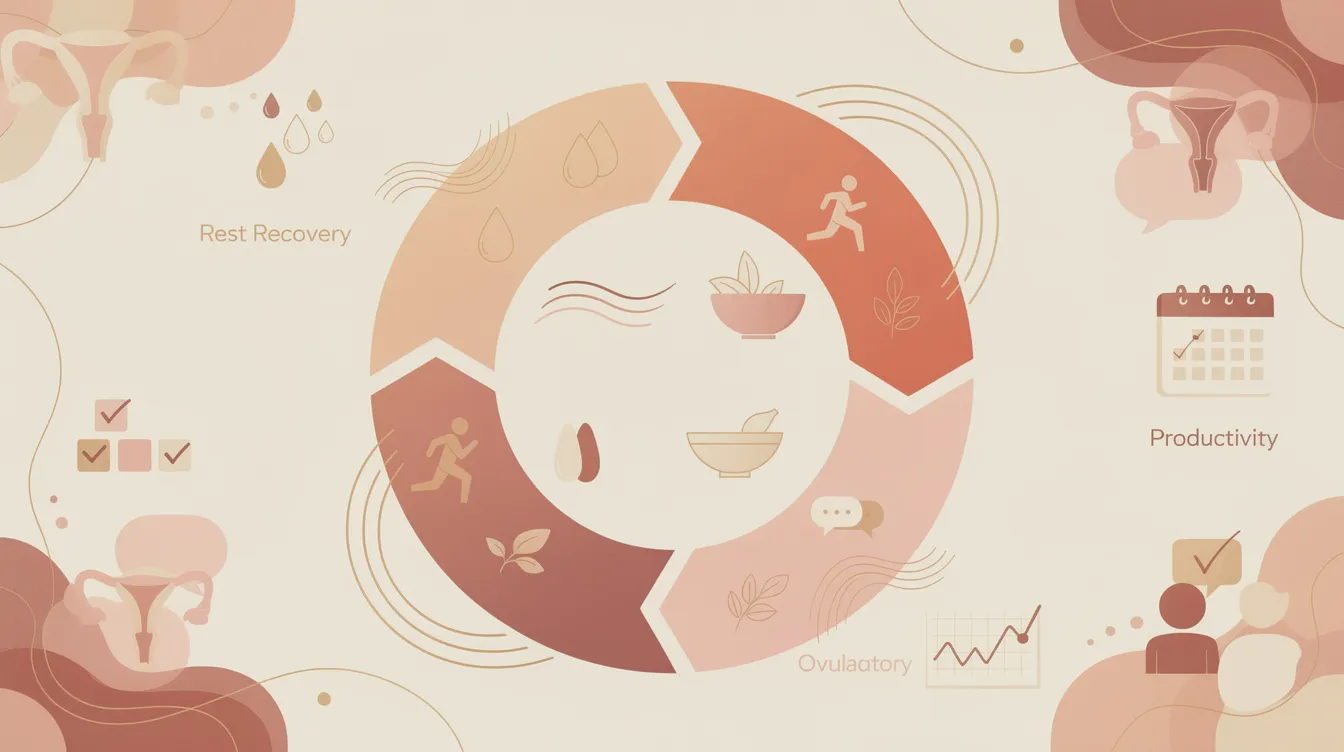
Cycle syncing is the practice of adjusting your exercise, nutrition, work habits, and social life to align with the four phases of your menstrual cycle. The core idea is straightforward: your hormones change predictably throughout your cycle, and these changes affect your energy, mood, strength, cognitive function, and recovery. Working with these fluctuations — rather than ignoring them — can improve performance and wellbeing.
But does the science actually support this? Let's separate evidence from hype.
What the Research Says
Cycle syncing has gained enormous popularity on social media, but the scientific evidence is more nuanced than influencer posts suggest.
What IS well-supported:
- Hormonal fluctuations across the cycle measurably affect energy, mood, and physical performance (multiple studies, including Sports Medicine, 2020)
- Estrogen has ergogenic (performance-enhancing) properties, improving muscle strength and aerobic capacity (Journal of Physiology, 2019)
- Progesterone raises core body temperature and increases carbohydrate metabolism (British Journal of Sports Medicine, 2021)
- Cognitive function and emotional processing shift across cycle phases (Frontiers in Neuroscience, 2023)
What is LESS supported:
- Specific, prescriptive meal plans for each phase (limited evidence)
- Claims that certain exercises are "dangerous" during menstruation (largely debunked)
- The idea that you must drastically change your entire routine every week
The balanced view: Your cycle does affect how you feel and perform. Paying attention to these patterns and making modest adjustments can help. Rigidly restructuring your entire life around cycle phases is probably unnecessary and impractical.
Phase-by-Phase Guide
Menstrual Phase (Days 1–5): Rest and Recover
What's happening hormonally: Estrogen and progesterone are at their lowest. Prostaglandins trigger uterine contractions (cramps). Iron levels may dip from blood loss. Energy is typically at its lowest point.
Exercise
Evidence-based approach: Contrary to the old myth that you should avoid exercise during your period, moderate activity can actually help with cramps. A 2018 meta-analysis in the Journal of Education and Health Promotion found that exercise reduced menstrual pain intensity.
- Good options: Walking, gentle yoga, light swimming, stretching, low-intensity cycling
- If you feel up to it: Moderate-intensity exercise is fine and may reduce cramps
- Listen to your body: If you're exhausted, rest. This isn't the time to push for personal records
- Skip if: You're experiencing severe cramps, heavy bleeding, or significant fatigue
Nutrition
- Iron-rich foods: Dark leafy greens, lentils, red meat, fortified cereals (to compensate for iron lost through bleeding)
- Anti-inflammatory foods: Fatty fish (omega-3s), turmeric, ginger, berries
- Warm, comforting foods: Soups, stews, herbal teas — there's a reason you crave warmth
- Magnesium-rich foods: Dark chocolate, nuts, seeds, bananas (magnesium may help with cramps — Magnesium Research, 2017)
- Stay hydrated: Mild dehydration worsens headaches and fatigue
Productivity
- Schedule administrative and routine tasks rather than high-stakes meetings
- This is a good time for reflection, planning, and strategic thinking
- Journaling and review sessions work well — introspective energy is often high
- Don't force creativity — but don't assume you can't be productive either
Social Life
- Give yourself permission to cancel plans without guilt
- Smaller, intimate gatherings may feel better than large social events
- Communicate with partners about how you're feeling
Follicular Phase (Days 6–12): Build and Create
What's happening hormonally: Estrogen is climbing steadily. FSH is stimulating follicle growth. Energy, mood, and confidence are rising. This is hormonally your "spring."
Exercise
Evidence-based approach: Rising estrogen supports muscle growth and recovery. A study in Frontiers in Physiology (2021) found that strength training in the follicular phase led to greater muscle gains compared to the luteal phase.
- Strength training: This is your best window for heavy lifts, progressive overload, and muscle-building
- High-intensity interval training (HIIT): Your body can handle and recover from intense work
- Try new things: Higher confidence and energy make this a good time to attempt new exercises or activities
- Group classes: Social energy is often high — leverage it
Nutrition
- Protein-focused: Support muscle recovery and building with adequate protein (research suggests 1.6–2.2g/kg body weight for active individuals)
- Complex carbohydrates: Whole grains, sweet potatoes, oats — fuel for increased activity
- Fermented foods: Sauerkraut, kimchi, yogurt — estrogen metabolism involves gut bacteria
- Light and fresh: Many people naturally gravitate toward salads and lighter meals as energy increases
Productivity
- Schedule important presentations, interviews, or negotiations
- Start new projects — creative energy and verbal fluency peak with rising estrogen
- Brainstorming sessions are particularly effective
- Social confidence is high — networking and team collaboration come easier
Social Life
- Plan social events, dates, and gatherings
- Confidence and social energy are at their peak
- Good time for difficult conversations that require clarity and confidence
Ovulatory Phase (Days 13–15): Peak Performance
What's happening hormonally: Estrogen peaks, LH surges, and testosterone has a brief spike. This is the hormonal apex of the cycle — maximum energy, confidence, and physical capability.
Exercise
- Peak performance window: Personal records, competitions, and challenging workouts
- Explosive movements: Sprints, plyometrics, power moves — fast-twitch muscle fibers respond well
- Team sports: Communication and coordination skills are enhanced
- Note: Some research suggests slightly higher injury risk during ovulation due to estrogen's effect on ligament laxity (American Journal of Sports Medicine, 2017). Focus on proper form.
Nutrition
- Anti-oxidant rich: Berries, leafy greens, colorful vegetables — support the body during peak metabolic activity
- Fiber: Cruciferous vegetables (broccoli, cauliflower, Brussels sprouts) support estrogen metabolism
- Lighter meals: Many people naturally feel less hungry during ovulation
- Zinc-rich foods: Pumpkin seeds, chickpeas, shellfish — support hormone production
Productivity
- This is your power window — schedule your most important work here
- Public speaking, leadership presentations, creative pitches
- Verbal fluency and social persuasiveness peak
- Collaborative work is strongest
Social Life
- Peak social energy and charisma
- Date nights, important social events, parties
- Communication is at its clearest
Luteal Phase (Days 16–28): Sustain and Wind Down
What's happening hormonally: Progesterone rises and dominates. Estrogen has a secondary peak then declines with progesterone. Body temperature rises. Metabolism increases. PMS symptoms may appear in the final 5–7 days as both hormones drop.
This phase has two distinct halves:
Early Luteal (Days 16–22): Steady State
Exercise:
- Moderate-intensity sustained exercise: running, cycling, swimming at a comfortable pace
- Yoga and Pilates — progesterone's calming effect pairs well with mindful movement
- Endurance work can feel good as metabolism is slightly elevated
Nutrition:
- Caloric needs increase slightly (approximately 100–300 calories/day) — honor increased hunger
- Complex carbohydrates to support serotonin production (progesterone lowers serotonin)
- B6-rich foods: poultry, fish, potatoes, bananas (B6 supports progesterone production and may reduce PMS — BMJ, 1999)
- Calcium and vitamin D: dairy, fortified foods, sunshine (a Journal of Obstetrics and Gynaecology meta-analysis found calcium supplements reduced PMS severity)
Late Luteal (Days 23–28): The PMS Window
Exercise:
- Lower intensity: walking, restorative yoga, gentle swimming
- Exercise can reduce PMS symptoms — but don't push through exhaustion
- Focus on movement that feels good, not performance goals
Nutrition:
- Magnesium: dark chocolate (yes, really — the craving has a biochemical basis), nuts, seeds
- Omega-3 fatty acids: fatty fish, walnuts, flaxseeds (anti-inflammatory, may reduce mood symptoms)
- Reduce caffeine: may worsen anxiety and breast tenderness
- Reduce salt: can worsen bloating and water retention
- Complex carbs over simple sugars: blood sugar stability helps mood stability
Productivity (Entire Luteal Phase)
- Detail-oriented work: editing, proofreading, analysis, quality control
- Completing projects rather than starting new ones
- Organizing, filing, administrative tasks
- Solo focused work may be more comfortable than group sessions
- If PMS hits mood, handle routine tasks and defer high-stakes decisions if possible
Social Life
- Early luteal: social energy still reasonable, more intimate gatherings preferred
- Late luteal: honor your need for solitude if it arises
- Communicate proactively with partners and close friends about PMS
Practical Tips for Getting Started
1. Track Before You Sync
Before changing anything, track your cycle and daily experiences for 2–3 months. Note energy levels, mood, exercise performance, cravings, sleep quality, and social inclination. Patterns will emerge that are unique to you.
2. Start with One Area
Don't overhaul everything at once. Start with exercise (easiest to adjust) or nutrition (most immediate impact on how you feel). Add other dimensions once you're comfortable.
3. Use Flexible Frameworks, Not Rigid Rules
Your cycle won't perfectly align with textbook phases every month. Use phase guidelines as starting points, then adapt based on how you actually feel. The goal is awareness, not obedience to a schedule.
4. Track Digitally
A cycle tracking app makes it infinitely easier to spot patterns and predict which phase you're in. Look for one that lets you log symptoms, exercise, mood, and nutrition alongside your cycle data.
5. Communicate with Your Environment
If you work with a team, you don't need to share cycle details — but you can schedule important meetings during your follicular/ovulatory phase and reserve your luteal phase for focused solo work.
6. Don't Use Your Cycle as a Limitation
Cycle syncing is about optimization, not restriction. If you feel great and want to do HIIT during your period, do it. If you feel energized and creative during your luteal phase, run with it. Your hormones are influences, not commands.
The Bigger Picture
Cycle syncing isn't about achieving perfect productivity or peak performance every day. It's about understanding that your body isn't a machine with a fixed output — it's a dynamic system with natural rhythms.
The real benefit isn't scheduling your life by phase. It's the awareness that comes from paying attention to how your body works. Once you start noticing patterns, you stop fighting your biology and start working with it.
That shift — from ignoring your cycle to understanding it — is the most valuable thing cycle syncing offers.
This article is for informational purposes only and does not constitute medical advice. Consult a healthcare professional before making significant changes to your exercise or nutrition routine.